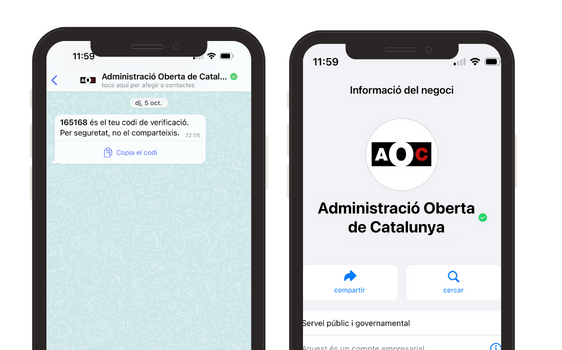
The AOC has begun using WhatsApp to send certain government communications; specifically, sending one-time codes to authenticate with idCAT mobile in some of the services offered by the AOC. At the same time, work is being done to incorporate new use cases such as appointment reminders or notification alerts.
The public administration must offer services centered on people and this implies, among other aspects, catching up and using the same channels that citizens use. Most of the communications sent by the public administration are via SMS and e-mail, channels that citizens do not use regularly. This is reflected in the fact that 30% of citizens do not respond to SMS and email alerts, even though they are official notifications.
Apart from this little use, SMS and e-mails have some important shortcomings such as the lack of verification of the sender, a fact that increases the concern about cyber-attacks. Likewise, there are also issues with lost SMS messages with telecom operators in certain countries.
This is why people-centric administration needs to evolve towards using omni-channel messaging platforms that are easy to use and include channels like WhatsApp. In this way you can guarantee:
- Trust: The sender is verified
- Global availability worldwide
- Confirmation of receipt
- Interactivity: 50% reduction in canceled appointments
- Citizen-centric approach: 70% of people check WhatsApp daily
- Similar cost to SMS, but fewer reminders are expected to be sent
On October 10, 2023, the Deputy Director of Innovation and Data of the AOC, Miquel Estapé, presented this new way of communicating with citizens at the National Congress of Innovation and Public Services. You can recover the presentation “Communications by Whatsapp".