

The AOC participates in the GovTech conference on local innovation at the service of citizens


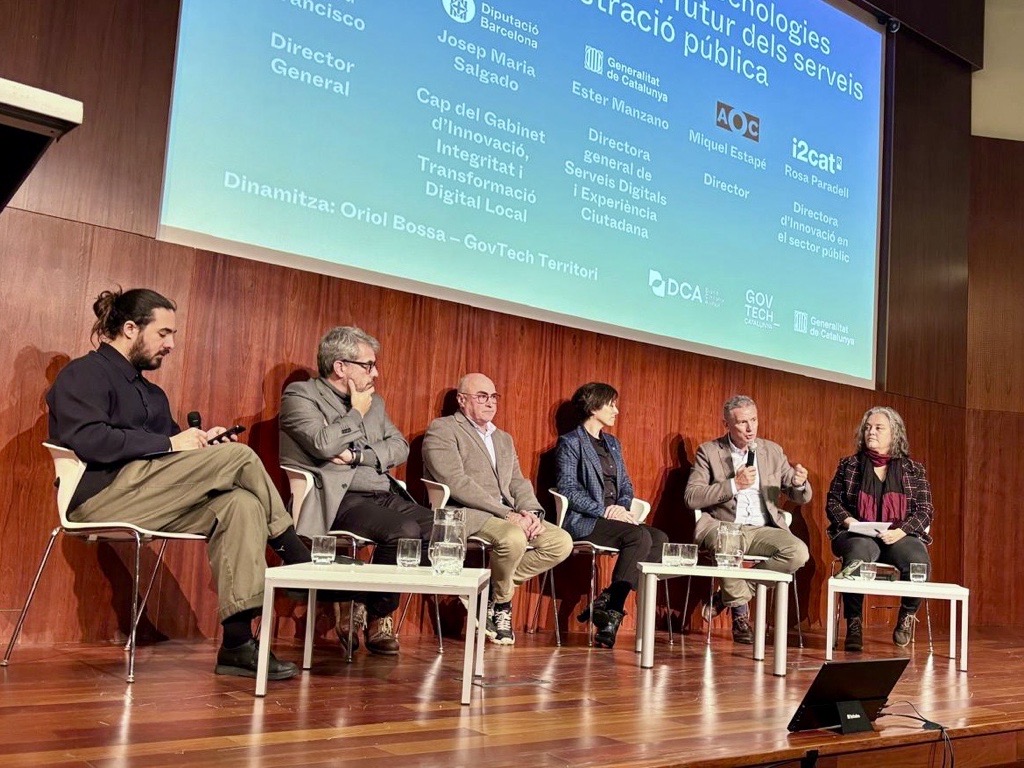
On December 16, the Neàpolis Auditorium in Vilanova i la Geltrú hosted the conference “GovTech in the territory: local innovation at the service of citizens“, organized by the Digital Catalonia Alliance (DCA). The event was a key meeting point to discuss how technology can transform public services from the proximity of city councils.
The director of the AOC, Miquel Estape, participated in the round table on the future of digital services and the role of advanced technologies, sharing debate with experts such as Andreu Francisco (Localret), Josep Miquel Salgado (Barcelona Provincial Council), Ester Manzano (Generalitat de Catalunya) and Rosa Paradell (i2CAT).
Although Catalonia is a benchmark in digital administration —with most local entities using shared services—, Estapé issued a clear warning: there is still little real transformationMany processes remain inefficient and the current model is not very sustainable.
The future demands a cooperative digital government that focuses on interoperability and automation to free up human resources that can focus on citizen care.
The AOC, which already manages more than 3 million daily procedures for 2.250 public entities, proposes three areas of action:
For 2026, the absolute priority must be to put the citizen at the center. The AOC applies a method based onempathy and user-centered design: listening to real needs, co-creating services with beneficiaries and measuring results with satisfaction and efficiency indicators.
The technology is here; the challenge now is governance and inter-institutional collaborationTo overcome obstacleseres legal and the lack of specialized talent, a shared digital strategy is needed.