

The AOC participates in COMTIC 2026: space for cooperation and transformation for the local world


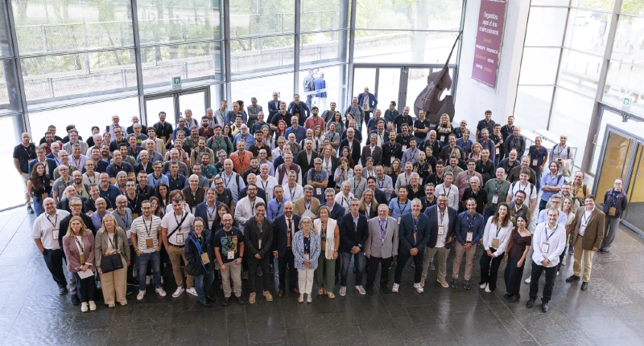
Girona hosted a new edition of COMTIC, the leading meeting of ICT professionals in the local Catalan world. More than 300 people participated in two days of debate, learning and exchange of experiences on the great challenges of the digital transformation of public administrations.
COMTIC has consolidated itself as a meeting space between technology managers, management, secretaries, interventions and municipal treasuries, with a shared purpose: to promote more efficient, innovative administrations capable of generating public value.
In this context, the director of the AOC, Miquel Estapé, presented the main advances achieved during 2026 and the strategic priorities for 2027. The common thread: putting technology at the service of a simpler, safer and closer local administration to citizens.
The new statutes of the AOC, which are expected to come into force in 2027, pursue three objectives: to strengthen the weight of the local world in the governance of the entity, to update its mission to adapt it to current challenges and to deploy a co-financing system that guarantees the sustainability of services.
The Catalan public sector has reached a good level of digitalization, but digitalization is not transformation. The challenge now is to take advantage of technology to generate savings, eliminate tasks that do not add value and shorten deadlines in areas such as licenses, tenders or personnel management. A specific example: Catalan administrations allocate around 90 million euros annually to postal notifications, an expense that electronic notification can reduce very significantly.
Transforming also means overcoming the logic of isolated procedures and moving towards an integrated vision of citizenship, with personalized and proactive services, such as school lunch subsidies or measures against energy poverty.
Via Oberta allows administrations to consult data and documents that citizens have already provided, but today only 20% of its potential is being used. To make this right effective, the AOC proposes four levers: standardized authorizations, a single request to manage them all, better integration with file managers and the promotion of meta-consultations, which group data and documents from various organizations in a single request.
The digital wallet idCAT, already available in beta version in the app stores, is the centerpiece of the new digital identity. It should allow an estimated saving of 2 million euros per year in SMS, accommodate the migration of the 6 million users of La Meva Salut and promote VALID AP, password-free access for Administration personnel. By 2027, the goal is to deploy the certificate in the cloud and leave behind T-CATs on cards or software.
Data is the raw material of transformation. That is why the AOC promotes the Smart Government Network, government and data models, a self-service platform, business intelligence (BI) and AI-as-a-service solutions, the LocalDades Space and culture and training initiatives. This 2026 has seen intense work with the four provincial councils, Localret and the city councils, and at the beginning of 2027 the AOC will organize an open day for the local world to share the results.
Trust in digital services begins with security. The AOC already has 24 services certified according to the National Security Scheme and is working on three more lines: a business continuity protocol, immutable backup copies in the cloud through Localret framework agreements and cloud computing models that reduce the infrastructure that each entity must maintain locally.
The AOC also contributes its grain of sand to the digital sovereignty of the local world. The proposal is based on four pillars: public hosting, data and document governance, an integration layer and a public functional core for local administration information systems. It is a shared project, with the participation of the four provincial councils, Localret and the AOC, so that administrations can decide on their own criteria regarding their technology.
See the full presentation: “Progress in 2026. Challenges for 2027"
One of the central results of the meeting was the COMTIC Girona 2026 Declaration, which provides continuity to the 2025 declaration and specifies the necessary conditions to move towards a comprehensive, interoperable and publicly governed information system.
The declaration proposes to align legal certainty, good resource management, organizational transformation and technological capacity. The deployment of useful and responsible artificial intelligence, the governance of sovereign data and the construction of comprehensive systems require an alliance between managerial, legal, economic and technological profiles.
COMTIC proposes that the local community allocate 4% of the municipal budget to technology and digital transformation, adding personnel, services and investments from chapters I, II and VI. The goal must be achieved progressively, with common calculation and monitoring criteria, and must serve to sustain services, strengthen security and transform organizations.
Digital sovereignty is defined as the public capacity to set priorities, make decisions with its own criteria and govern the value provided to society. This requires public talent, knowledge of the organization, the ability to attract and retain professionals, data governance and common and open standards.
The pooling of projects and capacities should help avoid duplication, improve efficiency and extend the benefits of transformation to all municipalities. Sharing implies agreeing on needs, building and sustaining solutions together and evaluating their results, ensuring that municipalities with fewer resources have a voice and decision-making capacity.
The Local World ICT Table, established in 2026, must become an effective capacity for joint work, decision-making and project promotion. The declaration calls for a shared agenda, specific priorities, identified responsibilities and monitoring of progress, as well as a more articulated commitment from supramunicipal institutions.
The declaration proposes reaching the 2027 edition with a shared methodology to measure the technological effort and the public value generated, common criteria on data, interoperability and evaluation, and joint projects that materialize cooperation.
From the AOC we would like to thank the work of COMTIC and all the people who make this community possible: the organizing committee, the speakers, the sponsors and, very especially, the professionals from the city councils and local entities who share knowledge and experiences to move the country forward.
COMTIC demonstrates that digital transformation is not just a technological issue, but a collective project that requires vision, talent, resources, guarantees and institutional cooperation. The work of the community is key to converting common needs into shared, sustainable and useful solutions for citizens.
More than 300 attendees consolidate COMTIC 2026 in Girona | COMTIC