

Interoperability: sharing data is not sending Excels


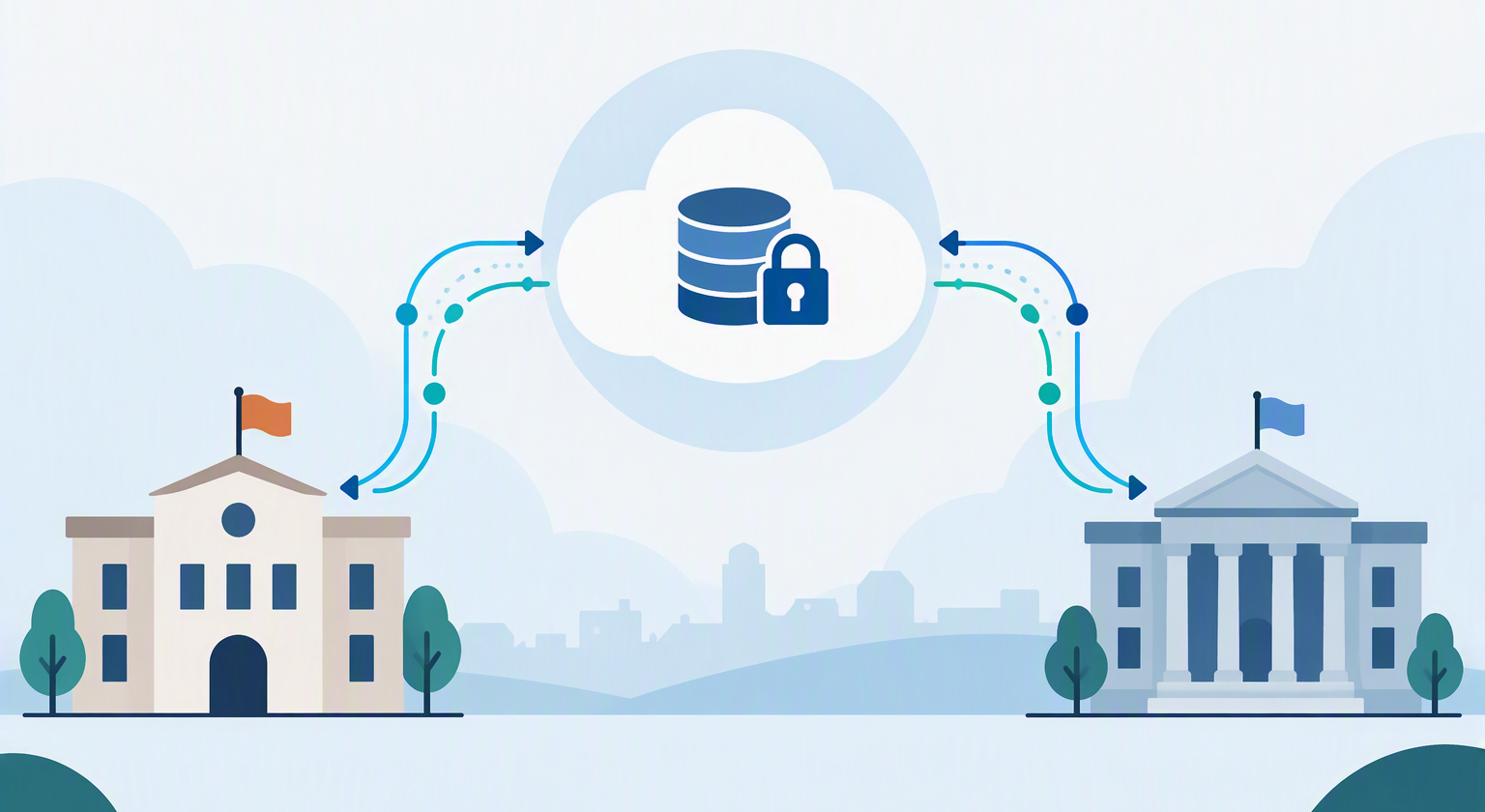
In many small and medium-sized municipalities, sharing information still means sending an Excel file, attaching a PDF, requesting a còpia of a document, making a query by email or calling another administration to confirm a piece of information. It is a way of working that has often allowed us to solve day-to-day problems, especially when teams are small and we need to respond quickly. But it also has important limitations.
Files can become outdated. Data can be copied incorrectly. Different versions of the same document can circulate. Traceability can be lost as to who consulted what and for what purpose. Citizens can be asked for documents that the administration already has. And a lot of manual work can be generated that does not provide public value.
That's why, when we talk about interoperability, we're not just talking about technology. We're talking about a more efficient, secure and guaranteed way of sharing data between administrations. Sharing data shouldn't mean moving files up and down. It should mean accessing the necessary data, at the necessary time, for the appropriate purpose, with legal guarantees, with security and with traceability.
Interoperability is the ability of administrations and their systems to exchange information and understand it correctly. In simple terms: that an administration can consult or receive data from another administration without having to ask citizens for it again, without duplicating work and without losing guarantees.
A city council may need to consult tax data, identity data, residence data, disability data, large family data, cadastral data, work life data or other information that is already in the possession of another administration. If this information is requested from citizens in the form of a certificate, receipt or còpia documentary, we are transferring an administrative burden to the person.
If the city council can consult it directly, when it is authorized to do so and within an administrative procedure, the service is more agile, simpler and more consistent with the right of citizens not to provide documents that are already in the possession of public administrations.
When talking about interoperability, it's easy to think only about platforms, integrations, web services or automatic information exchange. All of this is important, but it's not enough.
For two administrations to be able to share data in a useful way, several conditions must be met.
Therefore, interoperability is not just a technical issue. It is also a legal, organizational, semantic and trust issue.
In previous articles in this series we have explained that
All of this is essential to talk seriously about interoperability.
Interoperability doesn't start when we connect systems. It starts when we put order, criteria, and responsibility over data.
An Excel spreadsheet can be useful for a specific task, but it should not be the usual basis for exchanging data between administrations.
When we share data through files, risks and inefficiencies arise,
This way of working may seem fast, but it often ends up generating more work, more risk and less trust. Interoperability must help overcome precisely this logic.
In Catalonia, Via Oberta It is a fundamental tool to make interoperability between administrations effective. Via Oberta It allows public bodies to consult data and documents from other administrations within the framework of an administrative procedure, provided there is authorization and a legitimate purpose.
This favors a very important principle: not asking citizens for what the administration can already obtain through interoperable means.
Via Oberta It provides a lot of value because it avoids having to manually manage many certificates and supporting documents. It also reduces burdens on citizens, improves administrative efficiency and reinforces the legal certainty of consultations. But it also requires good data and good procedures.
To take full advantage of interoperability, the city council must:
Interoperability does not depend only on having access to a platform. It also depends on knowing who can consult, when they can do so, for what reason and how this consultation should be recorded or justified.
One of the great challenges of interoperability is that administrations not only exchange data, but also understand it in the same way. This is what is often called semantic interoperability. For example, when we talk about a beneficiary, an active file, a municipal facility, an activity, a property or an entity, the concepts must be clear.
If each administration uses different definitions, different codes or different classifications, it will be more difficult to share data and build common indicators. That is why the common data models, shared vocabularies, metadata and master dataIt is not enough for systems to be connected. The information that circulates must be understandable and coherent.
This means that administrations must have clear responsibilities: who is responsible for the data, who maintains it, who can consult it, who authorizes access, who resolves incidents and who guarantees that use is correct.
In a small or medium-sized municipality, this may seem complicated, but you can start with simple steps.
This work helps to better use services such as Via Oberta and prepares the city council for new data sharing scenarios.
Interoperability is not just about administrative efficiency. It is also a matter of rights.
Therefore, interoperability must be accompanied by guarantees: data protection, security, minimization, purpose, traceability and transparènciaInteroperating does not mean opening everything up. It means sharing what is needed, with whomever is needed, when needed and with the necessary guarantees.
Via Oberta is a consolidated piece for consulting data and documents within the framework of administrative procedures. But the challenge of data in the local world goes further. City councils also need to organize their internal data, build common models, prepare indicators, reuse information, share knowledge and develop services based on data and artificial intelligence.
This is where the Data Space and the local world data platform can contribute to taking a step further. It must help create the conditions so that local entities can share and reuse data with greater criteria, quality, security and trust.
This involves working on inventories, metadata, common models, quality, master data, catalogs, shared services and use cases. Making it easier for small and medium-sized municipalities not to have to build all this capacity alone.
The interoperability of the future will not just be about consulting a document or a specific piece of data. It will also be about being able to build smarter public services based on well-governed and shared data with guarantees.
Interoperability is an essential part of a more efficient, simpler and more citizen-oriented administration. But interoperating is not sending excels. It is sharing data with criteria, quality, security, traceability and public sense. Via Oberta has been facilitating this way of working for years, allowing local entities to consult data and documents from other administrations within administrative procedures and avoiding unnecessary burdens on citizens.
Now, the AOC Local World Data Space must help expand this vision, contributing to better ordering, describing, governing and reusing local world data.
To advance interoperability, local governments cannot be left alone. The Smart Local Governments Network is working on the model and common solutions around data and artificial intelligence. This work should allow the definition of shared criteria, data governance models, minimum inventories, common metadata, master data, use cases and reusable services for the local world as a whole. This approach is key to avoiding each local government having to solve the same problems individually.
Interoperability is not just a connection between systems, but it is also a way to better cooperate between administrations.