

Interoperability, one of the key indicators of the Digital Maturity Index


What tells us that a city council is advancing in its digital maturity? An important clue is whether it takes advantage of the data that other public bodies already have to simplify procedures and improve their management.
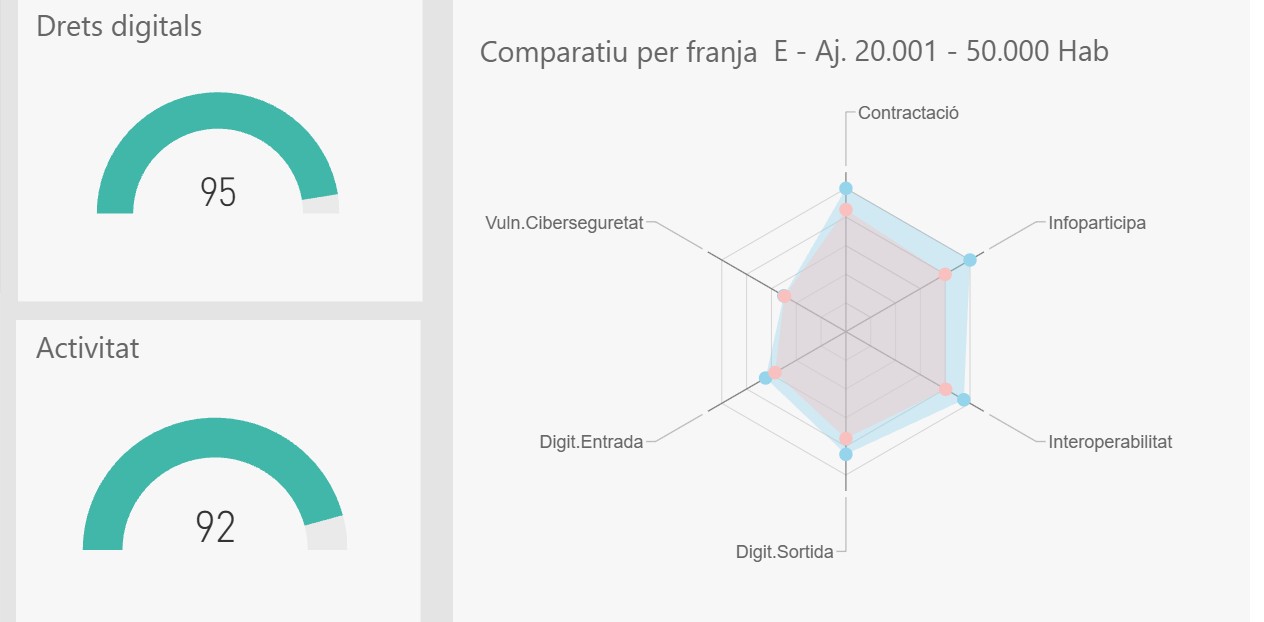
This ability to exchange and use data, which we know as interoperability, is a key part of digital transformation. That's why theDigital Maturity Index (IMD) It gives it a prominent weight through three indicators: the percentage of active interoperability services, the number of queries per inhabitant and the percentage of automated queries.
These indicators allow us to assess the extent to which local entities use interoperability and integrate it into their regular operations.
When a person requests aid or initiates a procedure, the administration may need data that another administration already has. Consulting this data through interoperability services avoids requesting unnecessary documentation, reduces administrative tasks and speeds up the process. And to make these inquiries, city councils have Via Oberta, the AOC interoperability service.
However, having interoperability services does not guarantee that their full potential is exploited. To assess digital maturity, it is also necessary to observe whether they are used routinely and whether queries are integrated into administrative procedures. This is precisely the approach adopted by the IMD.
Most interoperability indicators are part of the dimension ofActivity of the IMD. In this dimension, the following are measured:
The IMD also includes, within the dimension of Digital Rights, an indicator about the availability of the registry consultation service through Via ObertaThis indicator assesses whether the entity allows interoperability queries to be made to its register. Thus, the IMD values both the use of data from other organizations and the willingness to share its own.
Interoperability is also an indicator of organizational maturity. To take advantage of its potential, it is necessary to integrate services into administrative procedures and adapt the way the organization works. This can help reduce manual tasks, avoid requesting documentation that is already in the hands of the administrations, and streamline processing.
Therefore, it is not just about having technology, but about taking advantage of it to simplify administrative management and improve the services offered to citizens. This is one of the reasons why interoperability has a prominent role in the IMD.
The results can help each entity identify services that it does not yet use and queries that it could automate. You can consult all the IMD indicators and their weighting on the page Open Administration Recognition Methodology of the AOC.