The blockchain is a disruptive technology that can radically redefine traditional trust relationship models based on centralized authorities, such as the public sector. This can have a huge impact on the Administration.
The evidence tells us that blockchain in the public sector is in an incipient state, with very few real experiences and even fewer that have generated a differential public value compared to traditional technologies
Blockchain has a wide set of operational and legal constraints that are often underestimated. However, it can be a great solution for several problems that are not currently solved and that are increasingly urgent. Besides, we have no better alternative.
From the Administration we have the responsibility to adapt public services to the new challenges of society. We need to learn from the potential of new technologies to be prepared to guarantee their best application for the common good. We need to analyze, compare, test, evaluate and share knowledge. In this sense, we need to experiment with blockchain and learn.
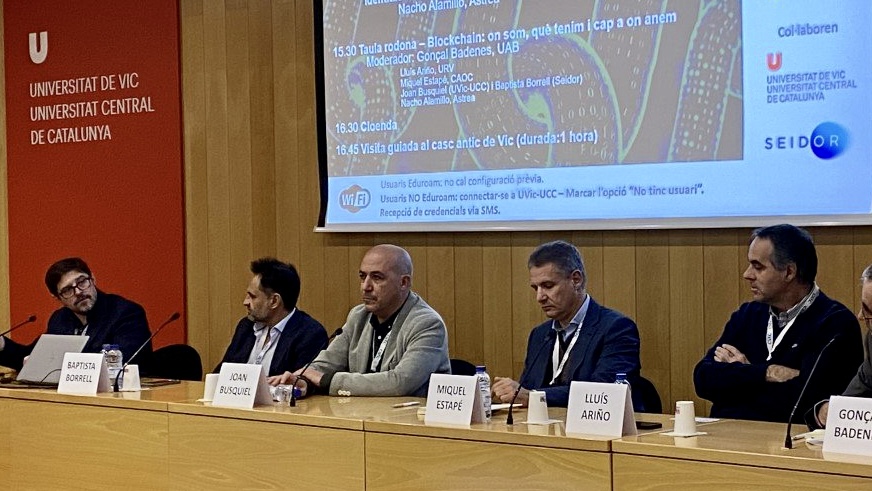
The debate highlighted some of the most interesting use cases.eressaints: self-managed digital identity to empower citizens, traceability in complex interoperability environments, new property ownership models, etc.
In Catalonia there are several innovative initiatives that we are doing concept tests and pilots. The AOC is participating in the European EBSI self-managed digital identity project: apart from the AGE and the universities, we are the only public body in the State that is involved.
The Open Administration of Catalonia (AOC) has achieved one of the most significant milestones in recent years in terms of cybersecurity and digital trust: 22 of its...
At the AOC we continue to work to promote the digital transformation of Catalan public administrations and strengthen our organizational and technological capabilities. For this reason, we have...
Spain remains among the leading countries in the European Union in terms of connectivity and digital public services, according to the Report on the State of the Decade...