Paula and Rita, the AOC chatbots who have already helped more than 93.000 users
Share
This post is over 1 year old. Content may not be up to date.
This first half of 2021, the AOC has launched two conversational boat pilots with the intention of validating their usefulness and gaining experience. It is not the first time that the AOC has developed a chatbot but it is the first time it has reached the pilot phase, and it is worth mentioning that it has been its focus on two very specific areas that has made it possible to reach this phase with relatively little effort.
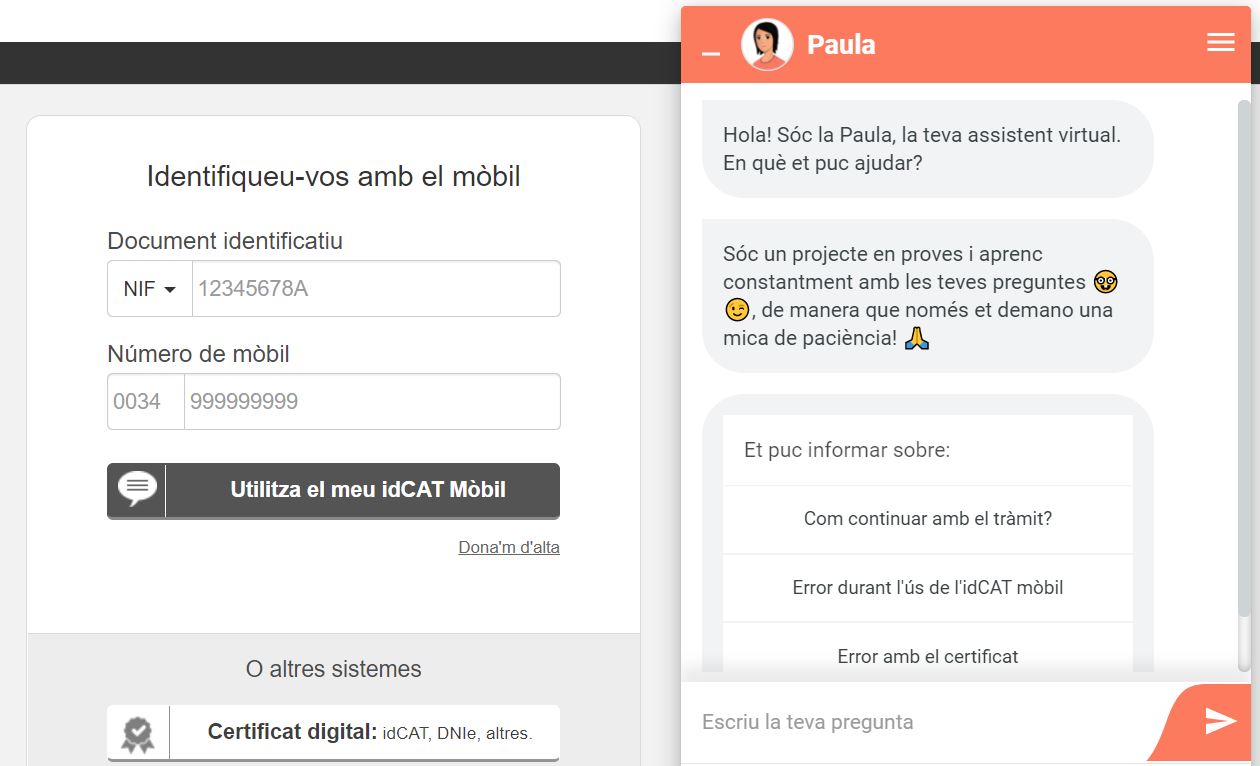
On January 21, Paula was activated on the VÀLid identification page, where all users who must validate their identity in a procedure go; on April 29, Rita was activated on the application and management page of theidCAT Certified. In both cases, these are spaces with a lot of activity and that generate a large volume of questions but little variety; that is, the same few questions are asked many times. This is the ideal place to start with a chatbot.
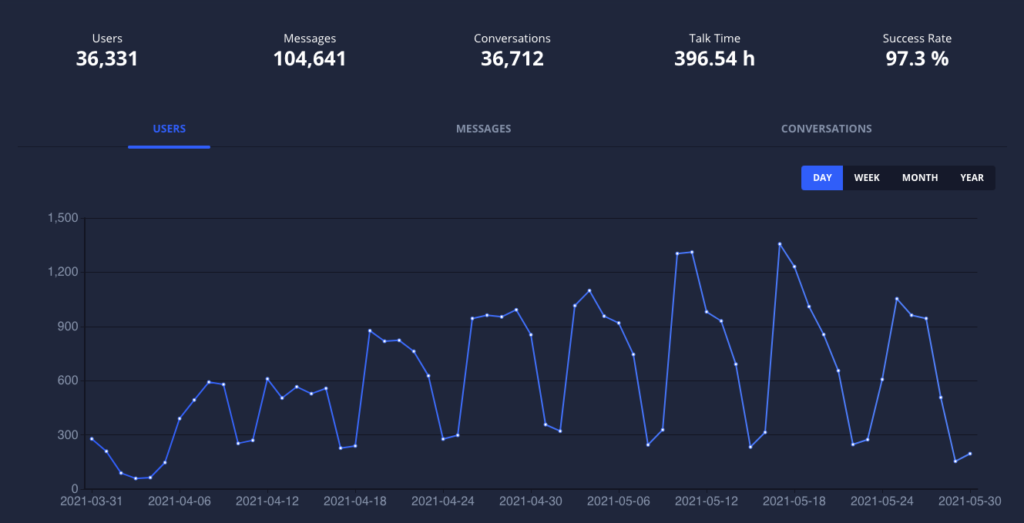
In the months that have been active, our chatbots have supported more than 93.400 people, with a response rate of 96%, in a total of 96.500 conversations. To compare this with traditional human support, although the complexity of the consultations is not comparable, in 2020 AOC user center agents responded to a total of 63.000 requests for support.
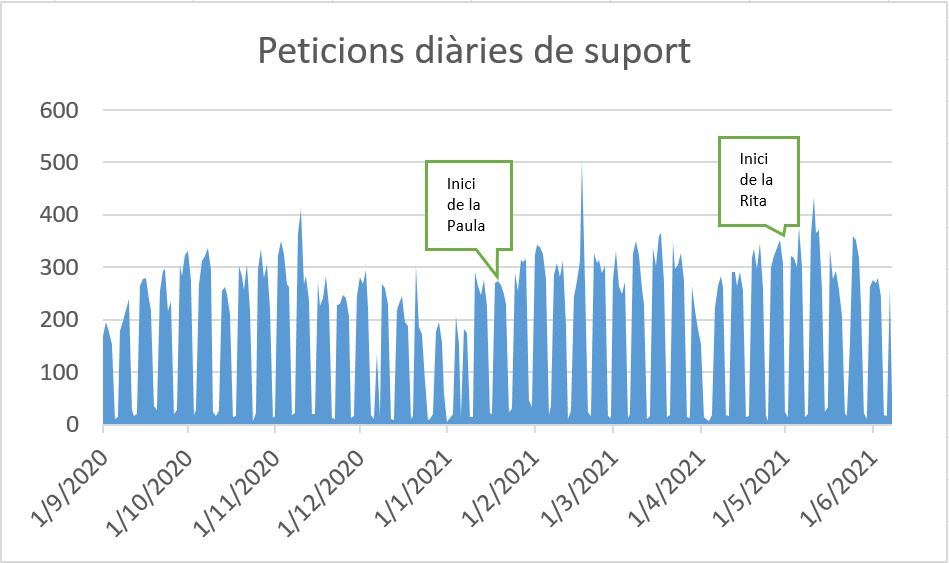
However, we cannot say that this new support will significantly free traditional support from work, but it does allow support to be sent to people who would otherwise have left the procedure; in this, a chatbot in the very context where the doubt arises, has no rival. In this sense, the graph shows the daily creation of support requests to our customer service center with the days when the chatbots were launched, as you can see, ordinary support maintains the volume of demand that had before.
In any case, it is too early to draw conclusions although we will continue to share our experience through this blog over the coming months.
Experimenting with artificial intelligence technologies
The AOC Consortium has been experimenting with artificial intelligence technologies for three years to improve the management of public services. One of these areas is that of conversational assistants (chatbots) in which we had made two previous attempts that were unsuccessful, but which have served as learning for the development of Paula and Rita. These chatbots present very promising results and we want to extend them to more use cases associated with AOC services and, later, to use cases of the Catalan local administrations themselves that respond to common needs.
Artificial intelligence technologies offer extraordinary opportunities to improve efficiency and provide new services to citizens, but they require a significant investment in technology, training and maintenance, and an intense learning process according to case studies. From the AOC we are trying to propose solutions of artificial intelligence as a service, so that all the Catalan administrations have at their disposal these innovative services, without cost and with the minimum effort of implantation thanks to the application of the good practices we have learned.